Two Cappadocian Skies, Two Entirely Different Stories
Hot air ballooning in Cappadocia is not a single, monolithic experience. The region's vast volcanic plateau contains multiple distinct landscapes, each with its own character, history, and aerial perspective. Among these, two zones have emerged as the primary destinations for commercial balloon flights: the globally famous Göreme and the lesser-known but equally remarkable Soganli Valley.
While both offer the fundamental magic of drifting above ancient volcanic formations at sunrise, they differ substantially in history, atmosphere, visual character, and the type of adventure they deliver. This detailed comparison explores both zones in depth — not just as balloon launch sites, but as living landscapes shaped by thousands of years of human history and geological forces.
The History of Ballooning in Göreme
Commercial hot air ballooning in Göreme began in the early 1990s when the first licensed operators launched experimental tourist flights over the fairy chimney landscape. The region's international fame as a balloon destination grew steadily through the late 1990s and accelerated dramatically in the 2000s as social media spread images of the multi-balloon sunrise panorama worldwide.
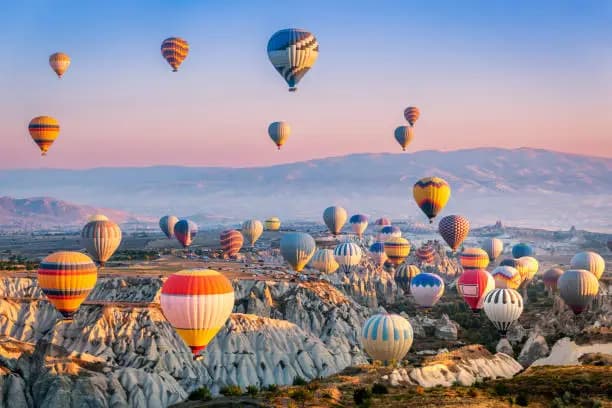
By 2010, Göreme had firmly established itself as the world's most recognizable ballooning destination. Today, the morning balloon launch has become an almost ceremonial part of Cappadocian life — the hiss of burners firing, the slow inflation of dozens of colorful envelopes, the silent ascent of 30–80 balloons at first light is a spectacle that draws as many ground-level spectators as it does airborne passengers.
The infrastructure supporting Göreme ballooning is extensive: more than 20 licensed operators, specialized launch fields maintained across the valley, dedicated chase vehicle roads, established flight corridors and altitude layering protocols managed by SHGM, and a deeply experienced local workforce of pilots, crew, and ground handlers. Göreme ballooning is a mature, well-regulated industry in 2026.
The History of Ballooning in Soganli Valley
Balloon operations in Soganli Valley began later than Göreme — the area started developing commercial balloon tourism in the early 2000s, primarily as an overflow or alternative offering for operators whose Göreme licenses were oversubscribed or who sought to differentiate their product from the increasingly crowded Göreme market.
Soganli itself is one of Cappadocia's most historically rich areas. The valley has been continuously inhabited since at least the Bronze Age, and its Byzantine monastery complex — including the extraordinary Karanlik Kilise (Dark Church) and Kubbeli Kilise (Domed Church) — represents some of the finest rock-cut religious architecture in the Eastern Mediterranean. The combination of ancient human history and dramatic natural landscape gives Soganli balloon flights an almost archaeological quality — you're floating not just above rock formations but above a landscape that humans have inhabited, worshipped, and been buried in for 3,000+ years.
What You See From the Air: Detailed Landmark Guide
Göreme's Aerial Landscape
Love Valley is the most iconic feature visible from Göreme balloon flights. The valley floor is crowded with hundreds of tall, cylindrical fairy chimneys — columns of soft tuff topped by harder basalt caps that resist erosion — creating a landscape that looks almost architectural in its regularity from above. At low altitude (100–200 meters), the pilot can maneuver close enough to these chimneys that passengers can see the individual rock texture on the caps.
Rose Valley and Red Valley run north-to-south along the eastern edge of the Göreme flight zone. The iron oxide in the tuff here produces extraordinary color gradations — deep burgundy at the base of canyon walls transitioning through orange and pink to cream at the tops of the formations. At sunrise, when low-angle light hits these formations horizontally, the color intensity is unmatched anywhere in the region.
Pigeon Valley, connecting Göreme to Uçhisar, is studded with thousands of hand-carved dovecote niches in the valley walls — former pigeon houses whose droppings fertilized Cappadocia's vineyards. From the air, the honeycomb patterns carved into the cliff faces are clearly visible and uniquely distinctive.
Uçhisar Castle — a massive natural rock formation riddled with cave rooms and connected by tunnels — is visible from virtually every point in the Göreme flight zone and provides a dramatic focal point for aerial photography.
Soganli's Aerial Landscape
Soganli's aerial landscape is characterized by a different scale and rhythm than Göreme. Rather than the tight cluster of fairy chimneys in narrow valleys, Soganli presents a wider panorama of eroded plateaus, deep canyon cuts, and isolated rock formations rising from agricultural land. The twin valleys of Soganli — Asagi Soganli (Lower Soganli) and Yukari Soganli (Upper Soganli) — form a Y-shaped canyon system clearly visible from above, with rock-cut churches visible as dark openings in the canyon walls from balloon altitude.
The agricultural character of Soganli is actually one of its most beautiful aerial features. In spring, the valley floors are brilliant green with wheat and barley; in autumn, harvested fields create a golden patchwork that reflects the sunrise light beautifully. The combination of human agricultural activity and ancient geological formations gives Soganli a lived-in, organic quality that purely geological Göreme sometimes lacks.
Flight Duration and Altitude Differences
Standard commercial balloon flights in both Göreme and Soganli last approximately 60–75 minutes in the air, plus 30–45 minutes of pre-flight preparation and 30–60 minutes of post-flight champagne breakfast. Total experience time is typically 2.5–3.5 hours from hotel pickup to return.
Maximum altitude varies by weather conditions and pilot discretion. In typical conditions, Göreme flights reach altitudes of 500–1,000 meters above ground level, with experienced pilots sometimes pushing to 1,500 meters on clear, calm days. Soganli flights often fly slightly lower, as the wider valley topography offers less need for altitude and pilots take advantage of proximity to the valley floor for dramatic canyon-level flying.
Crowd Levels and Atmosphere
The atmospheric difference between flying over Göreme and Soganli is dramatic. On a typical peak-season morning in Göreme, you'll be sharing the sky with 30–80 balloons and perhaps 600–2,000 other passengers. The SHGM coordinates altitude separation and flight corridor assignments to prevent conflicts, but the sky is visually busy — a spectacular and somewhat overwhelming experience that is simultaneously beautiful and crowded.
In Soganli, 3–8 balloons typically fly simultaneously. The sky is quiet. You can hear birdsong between burner blasts. The pilot can engage in leisurely conversation with passengers rather than focusing primarily on traffic avoidance. Landings are unhurried. The champagne breakfast afterwards is a small, intimate affair rather than a mass catering operation.
Photography Opportunities
Both zones offer extraordinary photography but in very different ways:
- Göreme: The multi-balloon panorama is one of the most photographed scenes in all of travel. If your goal is the classic Cappadocia balloon image — dozens of colorful balloons against a pink and orange sky above fairy chimneys — only Göreme delivers this. The sheer density of visual interest (fairy chimneys, cave churches, valley colors, other balloons) means there is always something compelling to photograph.
- Soganli: With few other balloons in the sky, your aerial photography is uncluttered. Canyon-level flying provides dramatic low-altitude shots that are harder to achieve in the busier Göreme airspace. The Byzantine monastery complexes visible from the air provide historically unique photographic subjects. The wide valley landscapes with agricultural patchworks create a softer, more pastoral aerial aesthetic.
Weather Consistency
Both Göreme and Soganli are affected by the same broad regional weather systems, and SHGM flight decisions typically apply to both zones simultaneously — if conditions are too dangerous in Göreme, they are almost always too dangerous in Soganli as well. That said, local microclimate variations mean that on borderline weather days, one zone may clear faster than the other. Soganli's slightly lower altitude and more open topography can sometimes result in lighter local winds than the deeper, more turbulent valleys of Göreme.
Booking Via BalloonScanner.com
BalloonScanner.com in 2026 remains the most comprehensive booking resource for both Göreme and Soganli Valley balloon operators. The platform's operator profiles include detailed information about launch zones, typical flight paths, and operator-specific highlights for each area. Live availability, transparent pricing, and verified reviews enable easy side-by-side comparison. Whether you're seeking Göreme's famous multi-balloon dawn spectacle or Soganli's quiet, historically immersive alternative, BalloonScanner.com provides the information and booking infrastructure to make the right choice for your adventure.


