Unleashing the Magic: Exploring Cappadocia's Winter Wonderland from a Hot Air Balloon
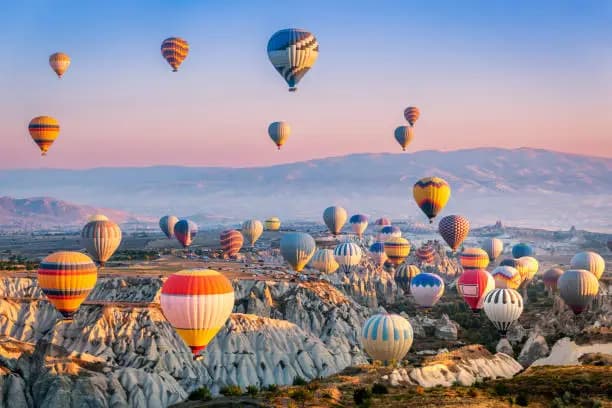
Close your eyes and imagine it: 6:45 AM, the first week of January. You're standing in a basket 800 meters above a landscape that looks like it was imagined by a fantasy novelist. Below you, thousands of fairy chimneys rise from valley floors blanketed in fresh white snow. The sun has just broken the eastern horizon, painting the snow-capped formations in amber, rose, and pale gold. The air is so cold and clear that mountains 150 kilometers away are visible in perfect detail. The only sound is the rhythmic roar of the burner above you and the faint creak of the wicker basket.
This is winter ballooning over Cappadocia — one of the most extraordinary travel experiences on earth, and one that relatively few visitors have the privilege of witnessing. In 2026, BalloonScanner.com makes planning this magical adventure easier than ever. Here's everything you need to know to experience it for yourself.
The Visual Contrast That Defines Winter Cappadocia
Cappadocia is visually stunning in every season, but winter transforms the landscape in ways that veteran travelers consistently describe as their most memorable experience in Turkey. The key is contrast:
Cappadocia's rock formations — the fairy chimneys, the tuff pillars, the cave-riddled cliff faces — are warm in color year-round: deep ochre, rust red, pale cream, volcanic grey. These are the colors of ancient volcanic deposits sculpted by millions of years of erosion. In summer, these formations bake under a harsh blue sky, beautiful but somewhat expected in their tones.
In winter, everything changes. When snow settles on Cappadocia — which happens multiple times between December and March — it creates a visual dialogue between warm and cold that is almost shocking in its beauty. The warm ochre pillars rise from fields of pure white. The ridges of the valleys are outlined in snow while their south-facing walls remain bare rock. The vineyards and orchards that pattern the valley floors become geometric abstractions in black and white.
From a balloon at altitude, this contrast is even more dramatic. You see the totality of the landscape simultaneously: the white-covered plateau, the deep cuts of the valleys revealing warm-colored walls, the clusters of fairy chimneys punctuating the snow-covered ground like stone sentinels, and the distant volcanic peaks of Erciyes and Hasan Dağı rising above it all.
Frozen Valleys and Ice-Draped Fairy Chimneys
On the coldest winter mornings — typically following two or more days of below-freezing temperatures — Cappadocia's valleys enter a state of deep winter that feels genuinely otherworldly:
- Frozen stream beds: The small streams that flow through Güvercinlik (Pigeon Valley) and Kızılçukur (Rose Valley) freeze into ribbons of ice, visible from altitude as silver threads cutting through the snow-covered valley floors.
- Ice-draped overhangs: Water seeping through the tuff formations freezes as it emerges, creating spectacular icicle formations on rock overhangs and cave entrances. When morning light catches these, they refract into prismatic colors.
- Frost-covered valley walls: North-facing valley walls that don't receive direct sunlight can remain frost-covered for days after a snowfall, creating delicate white crystalline textures on the ancient rock.
- Snow-capped conical peaks: The conical caps of the fairy chimneys — the distinctive dark basalt caps that top many of the tuff columns — hold snow particularly well, creating the distinctive "snow-capped fairy chimney" image that many photographers travel specifically to capture.
The Cold Crisp Air and Its Sensory Impact
There is something about cold, clear air at altitude that intensifies all sensory experience. In a summer balloon flight, the air is warm and thick; the burner provides occasional heat; the experience, while incredible, is comfortable. In winter, the experience is elemental:
The cold air is immediately bracing as you ascend above the valley rim. Your cheeks flush, your breath mists, and every detail of the landscape appears with unusual sharpness. The sound of the burner seems louder in the cold air. The silence between burner cycles is deeper, broken only by the distant bark of farm dogs in snow-covered villages far below.
Many winter balloon veterans describe a heightened sense of presence during cold flights — a quality of being fully, viscerally in the moment that is harder to achieve in the more comfortable conditions of summer. The cold keeps you alert, engaged, and sharply aware of the extraordinary privilege of floating above one of the world's great landscapes.
Sparse Tourist Crowds: The Quiet Sky
In peak summer, Cappadocia's morning sky fills with up to 40 balloons simultaneously. The sight of dozens of colorful envelopes against a sunrise sky has its own undeniable beauty, and it's become one of Cappadocia's signature images. But there's another side to it: with 40 balloons and 800+ simultaneous passengers in the air, the experience has an element of shared spectacle rather than intimate exploration.
In winter, typically only 10–20 balloons fly on any given morning, and often fewer. The sky feels spacious. Your balloon may drift for long stretches with no other balloon visible, just you, the pilot, and your fellow passengers floating above a vast, silent, snow-covered landscape. The quiet is different in quality — not the quiet of empty space, but the quiet of a living landscape temporarily stilled by winter.
For travelers who value depth of experience over the social media visibility of being among crowds, the winter sky over Cappadocia offers something genuinely rare: genuine solitude in one of the world's most-visited destinations.
The Emotional Impact of Winter Flying
Perhaps the most difficult aspect of winter Cappadocia ballooning to convey in words is its emotional impact. Travelers who have experienced both summer and winter flights consistently describe the winter experience as more emotionally affecting — more likely to produce genuine awe, even tears, even in travelers who consider themselves unsentimental.
Why? Several factors seem to combine:
- The unexpectedness of winter beauty: Summer Cappadocia is famous; its images are everywhere. Winter Cappadocia is less represented in mainstream travel media, meaning travelers arrive with fewer preconceptions and experience the landscape more freshly.
- The effort required: Waking at 5:30 AM in the cold, dressing in multiple layers, riding through dark streets to a snow-covered launch field — when the balloon finally lifts and the landscape reveals itself, the payoff feels earned in a way that a comfortable summer flight doesn't quite match.
- The scale and silence: A snow-covered Cappadocia seems even more ancient and vast than its summer counterpart. The snow strips away the summer green that softens the landscape, revealing the raw geology beneath — billions of years of volcanic and erosional history laid bare beneath a winter sky.
Photography Advantages in Winter
For photographers — whether using professional cameras or smartphones — winter balloon flights offer distinct advantages over summer:
- Extended golden hour: In winter, the low sun angle means the golden hour after sunrise lasts 60–90 minutes versus 20–30 minutes in summer. Your entire flight may take place in ideal golden-hour light.
- Dramatic shadows: Low winter sun creates long, raking shadows that emphasize the depth and three-dimensionality of the valley formations. Summer overhead sun flattens this relief.
- Color contrast: The warm-cool color contrast between snow and rock is extraordinarily photogenic and almost impossible to capture poorly.
- Atmospheric layers: Cold morning air over relatively warmer valley floors creates mist layers that rise between formations, adding depth and mystery to landscape photographs.
- Less haze: Summer heat creates atmospheric haze that limits visibility and reduces photo sharpness at distance. Winter clear air produces tack-sharp images across the full extent of the landscape.
Which Operators Run Year-Round?
Not all Cappadocia balloon operators fly in winter. Some smaller operators close operations between November and March, either because they lack the passenger volume to justify it or because their aircraft certifications require winter maintenance periods. Finding operators who maintain year-round operations requires research — which is where BalloonScanner.com provides significant value.
On BalloonScanner.com, you can search by your specific winter travel dates and see only those operators with active availability. This automatically filters out operators who don't fly in winter, showing you the certified, year-round operators who have the experience, equipment, and procedures to run safe winter operations. Year-round operators also tend to be the most experienced and best-resourced in the industry — flying in challenging winter conditions is a mark of operational maturity.
Tips for Booking a Winter Flight with Flexible Cancellation
The most important practical consideration for winter balloon bookings is cancellation flexibility. Winter weather cancellation rates in Cappadocia range from 35–60% depending on the month (highest in January, lowest in March). This means you genuinely need a rebooking or refund option, not just a vague "we'll try to help you" promise from your operator.
Here's how to protect yourself via BalloonScanner.com:
- Filter by cancellation policy: Use the flexible cancellation filter to show only operators offering free rebooking or full refunds for weather cancellations.
- Check rebooking windows: Some operators offer rebooking within 24 hours; the best offer rebooking for up to 12 months. The longer the rebooking window, the more flexibility you have.
- Book early days of your stay: If you're visiting for 4 days, book your balloon flight on Day 1 or Day 2. This maximizes your backup options if the first attempt is cancelled.
- Stay in Cappadocia for multiple nights: A 3–4 night stay in winter gives you 2–3 potential flying windows. One-night winter visitors to Cappadocia often miss the balloon experience entirely due to weather.
- Read recent reviews specifically mentioning winter: BalloonScanner.com's review system allows you to see how operators handled weather cancellations for previous winter guests — the best indicator of how they'll handle yours.
What to Expect: The Winter Balloon Flight Sequence
A winter balloon flight follows the same general sequence as a summer flight, with some winter-specific elements:
- Later launch time: Winter sunrise is around 7:00–7:30 AM versus 5:30–6:00 AM in summer. Your pickup will be around 5:30–6:00 AM, making the early wake-up slightly less extreme.
- Shorter potential flying window: Winter days are shorter, and wind patterns can change more quickly. Pilots are particularly attentive to weather windows and may shorten flights if conditions change.
- More demanding landing approach: The combination of cold air (denser, affecting balloon performance) and potentially snow-covered landing fields makes winter landings more technically demanding — a sign of the experience your winter operator should have.
- Post-flight celebration: The champagne toast has a particular warmth after a cold winter flight. Many operators provide hot tea or hot chocolate in addition to champagne for winter guests.
Conclusion: The Winter Flight Cappadocia Deserves
For the traveler willing to brave the cold, embrace the uncertainty of winter weather windows, and prepare properly for an early morning in sub-zero temperatures, Cappadocia's winter balloon experience offers something that no summer flight can match: the rare privilege of seeing one of the world's great landscapes in its most dramatic, least-visited, most authentically wild state.
Snow-covered fairy chimneys. Frozen valleys. Ice-draped formations catching the first light. A quiet sky with just a handful of balloons. The sharp, clear cold of a winter morning at altitude. These are memories that don't fade.
Plan your winter Cappadocia balloon adventure at BalloonScanner.com — where year-round certified operators, flexible cancellation policies, and transparent pricing make it easy to book with confidence, whatever the season.


